Introduction
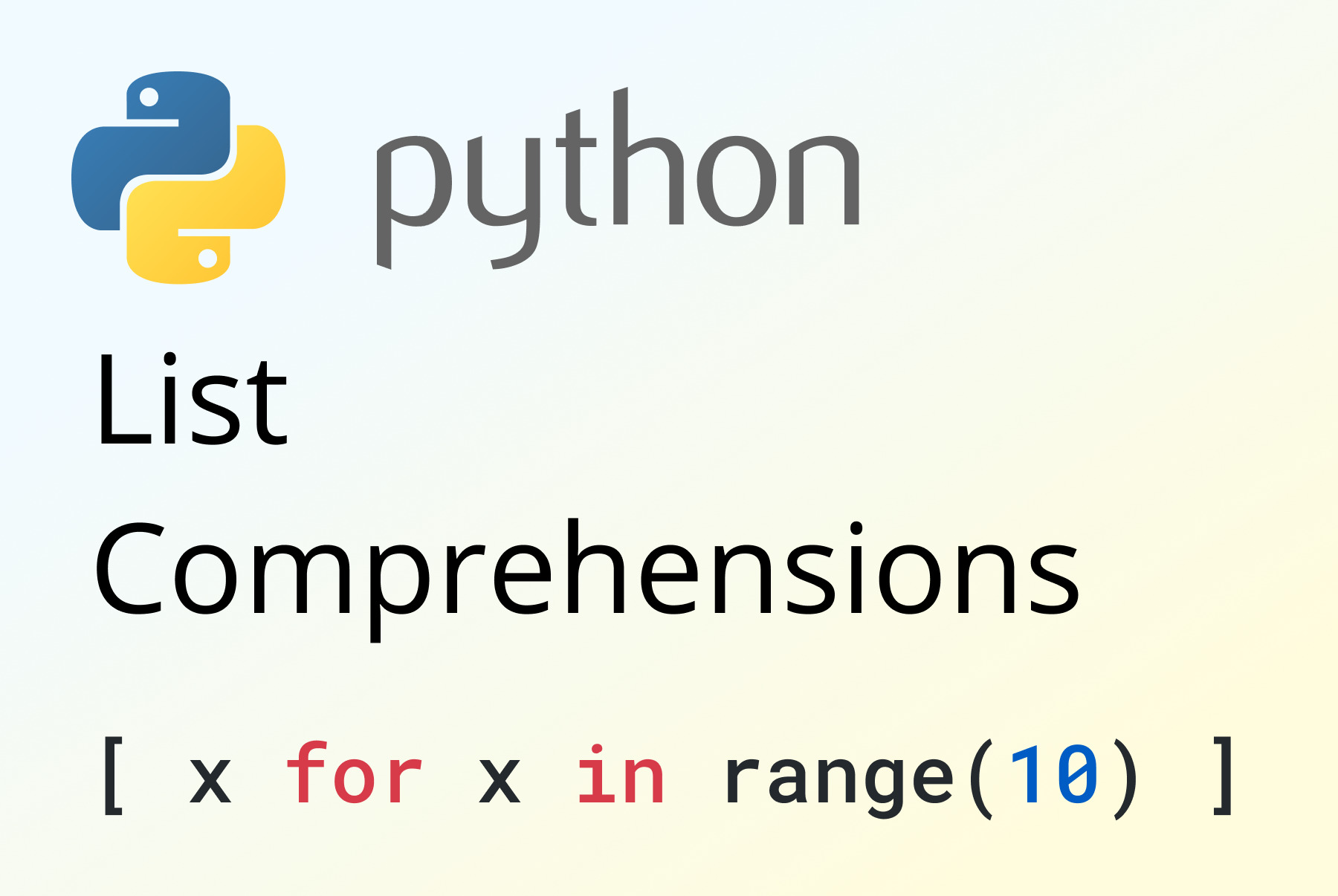
Python list comprehensions are one of the most powerful and elegant features in Python. They allow you to create lists in a single line of code, replacing traditional for loops with a cleaner, more readable syntax. In this guide, you’ll learn everything about list comprehensions with practical, real-world examples.
What is a List Comprehension?
A list comprehension is a concise way to create lists in Python. Instead of writing multiple lines with a for loop, you can express the same logic in a single line. The basic syntax is: [expression for item in iterable if condition]
Basic Example
# Traditional for loop
squares = []
for x in range(10):
squares.append(x ** 2)
# List comprehension (same result)
squares = [x ** 2 for x in range(10)]
print(squares) # [0, 1, 4, 9, 16, 25, 36, 49, 64, 81]
List Comprehension with Condition (Filter)
# Get only even numbers
evens = [x for x in range(20) if x % 2 == 0]
print(evens) # [0, 2, 4, 6, 8, 10, 12, 14, 16, 18]
# Filter words longer than 4 characters
words = [‘apple’, ‘pie’, ‘banana’, ‘cat’, ‘mango’]
long_words = [w for w in words if len(w) > 4]
print(long_words) # [‘apple’, ‘banana’, ‘mango’]
Nested List Comprehension
# Flatten a 2D list
matrix = [[1,2,3],[4,5,6],[7,8,9]]
flat = [num for row in matrix for num in row]
print(flat) # [1, 2, 3, 4, 5, 6, 7, 8, 9]
When to Use List Comprehensions
Use list comprehensions when: (1) You need to transform items in an iterable. (2) You want to filter items based on a condition. (3) You want to write cleaner, Pythonic code. Avoid them when the logic is too complex — readability matters more than brevity.
SEO Summary
Python list comprehensions make your code faster and more readable. They are used in data science, web development, and scripting. Mastering them is a key step in becoming a proficient Python developer.
Conclusion
This guide covered “Python List Comprehensions with Examples – The Ultimate Guide”.
Bookmark this page and keep it as your go-to reference. If you found this helpful, share it with fellow developers and check out more snippets on programsnippet.com!




Leave a Reply